
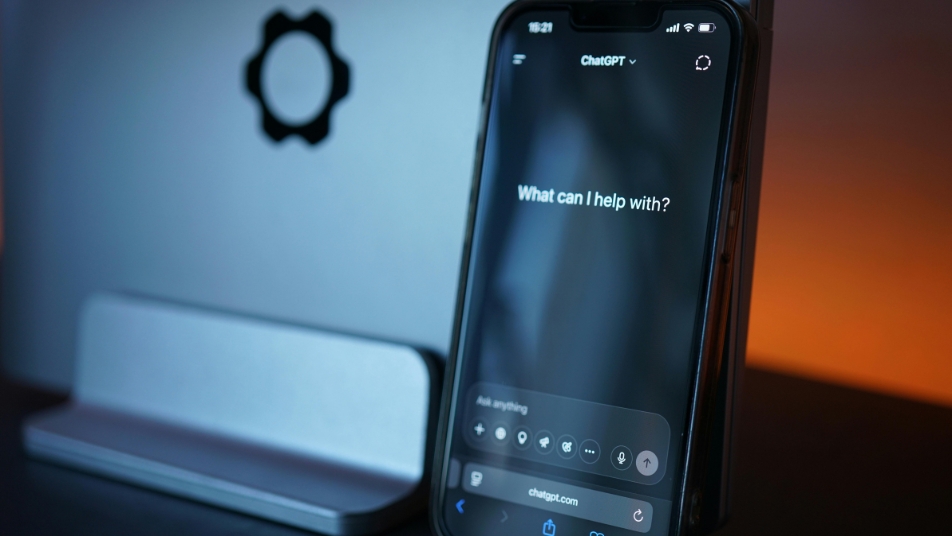
Travelers are no longer relying on a single channel to choose where to stay. Google, Maps, OTAs, reviews, social media, hotel websites, and increasingly AI assistants now work together across the hotel discovery journey.
A traveler who once searched “best hotel in Ubud” may now ask: “Where should my partner and I stay in Ubud for a quiet romantic getaway with a private pool, wellness experiences, local culture, and easy access to rice fields?”
This changes the challenge for hotels. Visibility is no longer only about ranking for a keyword; it is also about whether a hotel is clearly understood, relevant to the traveler’s intent, supported by reliable information, and credible enough to be considered in an AI-generated recommendation.
Key shifts in hotel discovery:
- Travelers can ask complex, conversational questions.
- AI can synthesize several needs into possible options.
- Search, Maps, OTAs, reviews, and social still shape decisions.
- AI is an additional discovery layer, not a replacement.
Phocuswright reported that nearly 40% of U.S. travelers used generative AI for trip planning in 2025 while still using other sources for validation (Phocuswright, 2025). This indicates changing discovery behavior, not replacement of traditional research.
Hotels should optimize the whole discovery journey, not AI visibility in isolation.
From Rankings to Recommendations—But Not Instead of Rankings
Hotel discovery is expanding toward a mix of ranking, synthesis, and recommendation. AI adds another pathway while SEO and established travel platforms remain important.
The changing discovery journey:
- Traditional: Keyword → Search Results → Website → Comparison → Booking
- AI-assisted: Traveler Question → Interpretation → Shortlist → Validation → Booking
- Wider reality: Search + Maps + OTAs + Reviews + Social + AI
Google states that SEO fundamentals remain relevant to AI Overviews and AI Mode, with no separate technical requirements or special AI schema required (Google Search Central).
The goal is to extend search visibility into recommendation readiness, not replace SEO.
AI Recommendations Are Not Traditional Rankings
AI recommendations are dynamic, not fixed positions. Results may vary by platform, prompt, language, location, model version, retrieval, and time.
Why recommendations can vary:
- Prompt wording and traveler context.
- User location and language.
- Platform and model version.
- Retrieval and indexed information.
- Timing and personalization.
Google says AI Overviews and AI Mode may use query fan-out and different models or techniques (Google Search Central). Research in LLM-based recommender-system settings has identified amplification bias and recommendation homogeneity, although these findings may not apply identically to every general-purpose travel assistant (Bao et al., EMNLP 2024).
Treat AI visibility as a diagnostic observation, not a permanent ranking.
Six Practical Foundations for AI-Era Hotel Discoverability
No universal formula guarantees an AI recommendation. Hotels can strengthen the accessibility, accuracy, relevance, and credibility of their digital information.
Key foundations
- Useful, specific content.
- Strong technical SEO.
- Clear hotel entity information.
- Local and destination context.
- Credible external evidence.
- Accurate, current information.
These are practical foundations, not confirmed universal AI ranking factors.
Improve the information ecosystem before chasing AI-specific tactics.
1. Create Useful, Specific Content
Hotel content should explain what the property is, where it is, what it offers, who it suits, and why it is distinctive. Generic promotional language provides little decision-making value.
What strong content should clarify:
- Property type and location.
- Accommodation and facilities.
- Relevant experiences.
- Guest segments.
- Distinctive positioning.
Google warns against creating many low-value pages for query variations simply to manipulate rankings or generative AI responses. Its guidance instead emphasizes useful, people-first content rather than mass-producing pages around every possible search or prompt variation (Google Search Central).
Build topical depth around genuine traveler needs, not artificial prompt variations.
2. Maintain Strong Technical SEO
AI-era discoverability still depends on technical accessibility. Important information should be crawlable, indexable, available in text, structured, and internally connected.
What owners should review:
- Crawlability and indexing.
- Mobile usability and page experience.
- Internal linking and hierarchy.
- Structured data where appropriate.
- Accurate Business Profile information.
Google states that pages must be indexed and eligible for Search to appear as supporting links in AI Overviews or AI Mode; special schema is not required (Google Search Central). Structured data can support machine understanding, but it should not be presented as a guaranteed path to AI recommendation.
Fix technical accessibility before investing heavily in AI-oriented content.
3. Build a Clear Hotel Entity
A hotel should be consistently described across its digital presence. Clear entity information reduces ambiguity without guaranteeing recommendation.
Five questions to answer clearly:
- Who are you?
- Where are you?
- What do you offer?
- Who are you relevant for?
- What makes you distinctive?
Core facts should remain consistent across the website, Google Business Profile, Maps, OTAs, and relevant third-party profiles. This does not prove that entity consistency directly increases recommendation probability, but it creates a more coherent and verifiable representation of the property across discovery surfaces.
Make the hotel easy to understand before trying to make it more visible.
4. Strengthen Local and Destination Context
Travelers think in terms of proximity, atmosphere, convenience, and experiences. Hotel content should explain how the property fits its destination.
Useful local context includes:
- Nearby landmarks and attractions.
- Travel times.
- Neighborhood characteristics.
- Transport access.
- Relevant local experiences.
Explaining that a hotel is near central Ubud but in a quieter area is more useful than an address alone. Location context helps travelers judge fit while establishing clearer relationships between the hotel and the places or experiences around it.
Treat location as part of the guest decision, not merely contact information.
5. Build Evidence Beyond Your Website
A hotel’s own claims are not the same as independent validation. Reviews, credible media, destination guides, OTAs, and third-party references can strengthen digital credibility and provide additional discovery sources.
Important evidence sources:
- Guest reviews.
- Credible travel publications.
- Destination websites.
- Relevant media coverage.
- OTA information.
- Consistent third-party references.
A “leading wellness resort” claim becomes stronger when supported by repeated guest feedback and credible coverage. However, reviews, press mentions, and citations should not be presented as confirmed universal AI ranking factors; their defensible value is that they strengthen the wider information and evidence ecosystem around a property.
Build the real experience first, then ensure the digital evidence reflects it.
6. Keep Critical Information Accurate
Outdated hotel facts can create confusion across search, AI, OTAs, and booking channels. Accuracy matters most where information affects purchasing decisions.
High-priority information to audit:
- Rooms, facilities, and operating hours.
- Check-in, policies, and accessibility.
- Pricing, packages, and promotions.
- Transport and location details.
- Sustainability or “best” claims.
For Indonesian hotels, consumer-facing information falls within Law No. 8 of 1999 on Consumer Protection, while personal-data processing may engage Law No. 27 of 2022 on Personal Data Protection. Both laws remain in force, although their application depends on the specific practice and context.
Accuracy and substantiation should come before optimization.
When Your Hotel Is Missing From AI Recommendations, Diagnose Before Publishing
A missing AI mention does not automatically mean another article is needed. The issue may involve relevance, evidence, data quality, pricing, availability, or competition.
Five gaps to diagnose
- Relevance gap: Does the hotel genuinely match the intent?
- Information gap: Is the real offering explained clearly?
- Evidence gap: Are important claims independently supported?
- Entity/data gap: Are core facts inconsistent?
- Competitive/distribution gap: Are competitors stronger in reputation, pricing, availability, inventory visibility, brand recognition, or distribution?
A couples-focused retreat should not chase “best family resort” merely because it is absent from an AI answer. The right intervention may be content, PR, technical cleanup, pricing, product, distribution or no action.
Use the rule: Not mentioned → Diagnose why → Choose the right intervention.
Measure AI Visibility Carefully
AI visibility monitoring is useful for diagnosis but is not a standardized ranking system. One prompt run is not definitive evidence.
Useful diagnostic metrics
- Mention rate
- Prompt coverage
- Recommendation context
- Competitive presence
- Factual accuracy
Testing should record the prompt, language, platform, date, and multiple observations. Higher visibility after a content change does not prove causation; reviews, press, indexing, competitors, or model updates may contribute.
Use AI visibility as directional intelligence, not a guaranteed causal KPI.
Visibility Does Not Equal Revenue
An AI mention is one touchpoint in a longer journey. Travelers may use AI to narrow options, then validate through Google, Maps, OTAs, reviews, social media, or hotel sources.
A more realistic journey is: AI Discovery → Awareness → Validation → Comparison → Website or OTA → Booking
Booking.com’s 2025 survey of more than 37,000 consumers across 33 markets found only 6% fully trusted AI and 12% were comfortable with independent AI decisions. Because this is company-sponsored research, the findings should be interpreted within their survey context rather than treated as a universal measure of traveler behavior (Booking.com Global AI Sentiment Report, 2025).
AI visibility should therefore be assessed alongside branded search, conversion, direct booking share, OTA contribution, revenue, and acquisition cost.
The goal is qualified discovery that supports profitable demand, not more AI mentions alone.
Build for the Whole Hotel Discovery Ecosystem
The strongest strategy is not an isolated “GEO strategy.” Hotels should build a coherent presence across where travelers discover, validate, compare, and book.
What hotels should aim for
- Clear enough to understand.
- Accurate enough to trust.
- Relevant enough to match real needs.
- Credible enough to validate.
- Accessible enough for machines to interpret.
- Commercially strong enough to convert.
A Pew Research Center analysis of 900 U.S. adults’ browsing behavior in March 2025 found traditional-result clicks on 8% of Google visits with an AI summary versus 15% without one (Pew Research Center, 2025). This is observational, not proof of causation. Google separately says clicks from search pages with AI Overviews can show higher engagement by its definition, illustrating that click frequency and click quality are different questions (Google Search Central).
The strategic question is not “How do we make AI mention our hotel?” but “How do we help the right travelers accurately discover, understand, trust, and choose our hotel wherever they make their decision?”
Recommendation readiness is not a replacement for SEO. It is another layer of a broader hotel discovery strategy built around relevance, credibility, guest experience, and measurable business outcomes.